
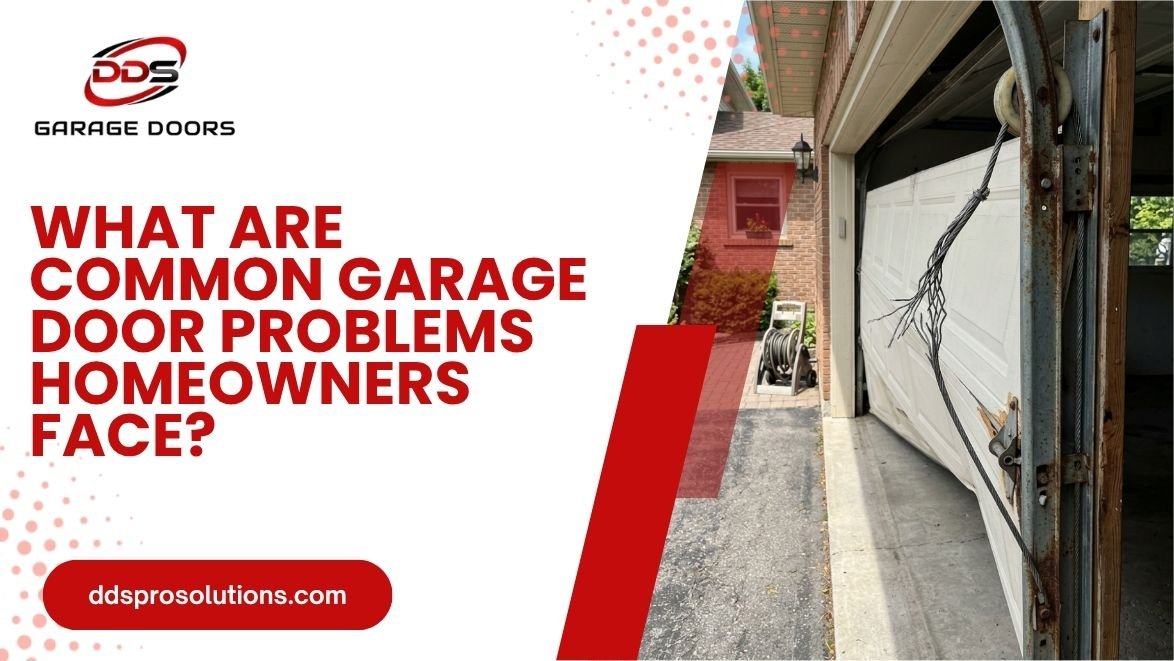

What are common garage door problems homeowners face?
We usually don’t pay attention to our home’s garage door until it suddenly stops working and locks our car inside. You grab your morning coffee, press the remote control button to head out for your daily commute, and nothing happens. You just hear a terrible grinding noise or absolute silence.
Because an overhead garage door is the heaviest moving object in your entire house, an unexpected breakdown isn’t just an inconvenience. It can turn into a major safety hazard very quickly if you try to force it open. Understanding the mechanics behind these failures can save you hundreds of dollars in unnecessary repairs and keep your daily schedule moving along smoothly.
Key Takeaways
- Tightly wound torsion springs and frayed lift cables can withstand extreme mechanical tension but can cause severe injury if mishandled.
- Misaligned safety sensors or dead remote transmitter batteries are quick, simple issues you can easily troubleshoot on your own.
- Loud scraping or popping sounds during a cycle are clear warning signs that your tracking rails are warped or your bearings are dry.
- Scheduling an annual inspection with a qualified technician can prevent minor issues from causing major damage to your opener system.
9 Common Garage Door Issues and Their Causes
An overhead door depends on an interconnected network of heavy steel hardware, balancing weights, and electronic safety eyes working together perfectly. When one tiny part wears down or snaps, the whole system locks up to prevent total structural damage. Here are the nine most frequent breakdowns homeowners deal with:
1. Broken Torsion Springs or Extension Coils
The heavy lifting of a two-hundred-pound garage door isn’t actually done by your overhead electric motor. That immense burden is handled by the thick steel springs mounted right above the door header. Every time the door lowers, these metal coils twist tightly to store the mechanical energy required to hoist the panels back up later. Because they bear constant physical pressure, these steel coils will inevitably snap after a certain number of cycles.
When a spring fails with age, it often produces a loud bang that many homeowners mistake for a gunshot. Attempting to run your automatic opener after a spring break can place excessive strain on the opener and potentially damage its internal gears. If you are stuck dealing with a door that feels too heavy to lift even an inch off the ground, calling an experienced garage door company near you is the safest way to have the broken coils swapped out without hurting yourself.
2. Misaligned Infrared Safety Sensors
Down by the floor on both sides of your vertical track are two tiny electronic sensors that project an invisible infrared safety beam across the opening. This feature is designed to stop the heavy door from crushing a pet, a child, or a vehicle bumper. If a stray garbage can bumps a bracket out of place, or if thick spiderwebs cover the glass lens, the door will start lowering and then immediately reverse back to the top.
You can usually spot this issue by looking at the small LED indicator lights on the sides of the sensors. If one light is blinking or completely dark, the beam is broken. Gently loosen the wing nut, push the brackets until the lights glow a solid green or amber, and wipe the glass clean with a soft cloth to restore smooth operation.
3. Frayed or Snapped Steel Lift Cables
Running parallel to your tracking rails are thick, heavy-duty steel lift cables that wrap around metal drums at the top corners of your walls. These braided lines perform the physical work of pulling the bottom brackets upward as the springs unwind. Over time, moisture in the garage can cause these raw steel wires to rust, fray, and split apart strand by strand.
A snapped cable causes the door to instantly lose its balance and hang dangerously crooked within the opening. Never attempt to use your remote or pull the red emergency release cord if a cable looks loose or unraveled. The bottom brackets attached to these lines are under hundreds of pounds of active tension, so you should leave these adjustments to a trained garage door professional.
4. Warped or Bent Metal Guide Rails
For your door panels to glide up into the ceiling quietly, they need a completely straight, unblocked path along the vertical and horizontal tracking rails. However, the constant vibration of daily use can gradually loosen the lag screws that hold these tracks to your wall studs. When a track slips out of position, the rollers will bind against the metal edges, causing the system to shudder violently.
Operating a door with bent tracks is highly risky because a single roller can slip completely out of the slot, causing the entire heavy assembly to crash down unexpectedly. If you notice any noticeable gaps or bends in the metal curves, call a reliable garage door company right away. A trained technician can brace the panels safely, straighten the metal alignment, and tighten the structural mounts.
5. Stripped Internal Opener Gears
If you press your wall button and hear the electric ceiling motor humming loudly, but the chain or belt isn’t moving at all, your drive gears are likely destroyed. Inside most residential openers sits a small drive gear made of heavy-duty nylon. This plastic gear is designed to act as a mechanical fuse, stripping its teeth away if the motor is forced to lift a door that is far too heavy due to an unbalanced or broken spring.
Replacing this gear kit requires taking down the main housing, pulling the drive shaft apart, and applying fresh grease to the new teeth. If your opener unit is more than twelve to fifteen years old, it is usually a better long-term investment to replace the entire motor head. Modern openers run on quiet DC motors and feature smart Wi-Fi connectivity and mobile app alerts that let you operate or monitor your garage door remotely.
6. Worn-Out Rollers and Dry Bearings
The small wheels that guide your door panels up and down the steel tracks take a beating every single day. Standard, factory-installed garage doors usually come equipped with cheap plastic wheels that spin on open, unsealed ball bearings. Over the years, floating dirt and hair get trapped inside the grease, turning it into an abrasive paste that freezes the bearing solid.
Once a roller stops turning, it slides blindly along the track, grinding down the metal and producing a terrible screech. Upgrading your old hardware to heavy-duty nylon rollers with sealed steel bearings makes a massive difference. Nylon wheels run almost completely silent, never need manual greasing, and easily last twice as long as cheap steel or plastic models.
7. Dead Transmitter Batteries or Blown Fuses
Sometimes the scariest-looking breakdowns have the simplest solutions. If your wall switch opens the door perfectly but your garage door remote does absolutely nothing, your transmitter batteries are likely dead. If the door refuses to move from any switch and no lights turn on inside the ceiling unit, you might be dealing with a tripped circuit breaker in your main electrical panel.
Unplug the opener from the ceiling outlet, reset your breaker switch, and plug a small lamp into the outlet to verify that power is actually running to the ceiling. If the outlet works but the opener remains completely lifeless, a recent lightning storm or power surge may have fried the unit’s main logic board.
8. Dented and Damaged Section Panels
Overhead garage doors are made of individual metal or wood panels pinned together with heavy steel hinges. If your car accidentally bumps into the lower section while you are backing out of the driveway, the metal skin can easily buckle. Even a small dent can alter the system’s total height and weight distribution, causing the panels to jam in the header opening.
Trying to patch a crumpled panel with heavy wood braces usually throws off the spring balance and ruins your motor. Choosing a specialized garage door company in Illinois gives you access to exact factory-matched panels. Replacing just the damaged bottom section allows you to restore your home’s curb appeal and structural safety without paying for a brand new door setup.
9. Broken Remote Antenna and Range Loss
If you find yourself pulling all the way up into your driveway and smashing the remote button five times just to get the door to respond, your receiver antenna is losing its range. The main motor housing has a short, thin wire dangling from the side that catches radio signals from your car. If this wire gets clipped short or pushed up inside the plastic cover, your range drops down to nearly nothing.
Make sure the antenna wire is pointing straight down toward the garage floor. If your range is still poor, look around the garage for new electronic devices, such as LED shop lights or wireless security cameras. Cheap electronic transformers can generate massive amounts of radio interference that drown out your remote’s signal.
Read Also: What services does a garage door company provide?
Conclusion
A malfunctioning garage door is a major disruption that compromises your home’s security and your family’s daily routine. While clearing debris from your safety eyes or swapping out a remote battery are simple DIY tasks, fixing broken springs, replacing lift cables, or straightening warped tracks require specialized tools and technical training.
Attempting to repair high-tension components on your own can lead to severe structural damage or physical injury. If your overhead door is hanging crookedly, making loud grinding noises, or refusing to open, the expert team at DDS Garage Doors is ready to assist.
Frequently Asked Questions
Is it safe to spray regular WD-40 on my noisy garage door rollers and tracks?
No, you should never use classic WD-40 on your garage door components. WD-40 is a penetrating solvent and degreaser, not a long-lasting lubricant. It will quickly wash away any existing grease and leave behind a sticky film that attracts dirt, hair, and grit, eventually locking up your bearings. Instead, use a heavy-duty silicone or lithium spray.
How can I tell if my garage door springs are properly balanced?
Pull the red emergency release cord while the door is fully closed to disconnect it from the electric opener. Carefully lift the door by hand to about waist height and let go. If the system is perfectly balanced, the door should hover in place on its own. If it crashes down violently or shoots upward, your springs have lost their tension and need a professional adjustment.
Should I replace both garage door springs if only one of them has snapped?
Yes, you should always replace your springs in pairs. Both springs were installed at the same time and have undergone the same number of daily opening and closing cycles. When the first spring breaks from metal fatigue, it means the matching spring on the other side has reached the end of its lifespan and will likely snap a few weeks later.