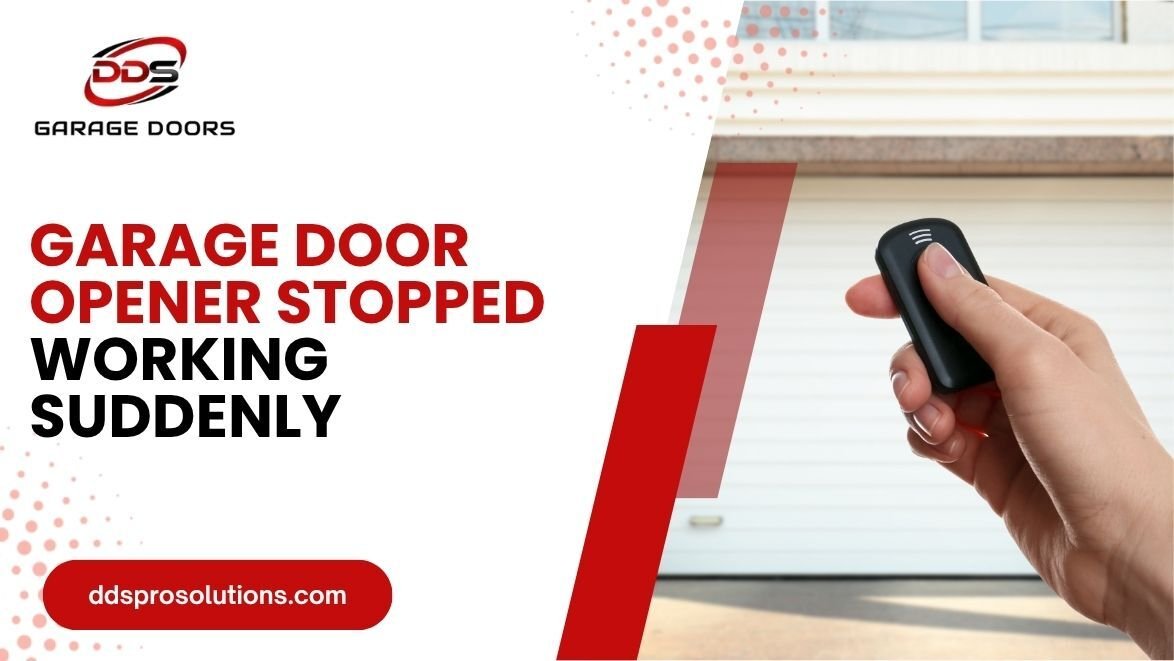

Garage Door Opener Stopped Working Suddenly
You walk out, press your remote, and absolutely nothing happens. A garage door opener that stops working out of nowhere can instantly mess up your morning routine. But don’t panic. Because these overhead setups rely on a mix of electricity, radio waves, and heavy steel parts, a sudden breakdown is usually just a single disconnected wire or a blocked safety sensor. You rarely need to replace the entire system. That is why checking the most common trouble spots first will usually reveal the issue so you can get your door moving safely again.
Find the perfect garage door for your home. Book your installation consultation today.
Key Takeaways
- Test multiple activation methods to see if the problem is just a dead remote control battery or a broken wall button wire
- Look at the small safety eye lights at the bottom of the tracks to make sure the invisible safety beam is aligned and clean
- Verify your main power supply by checking for a tripped electrical circuit breaker or a clicked outlet reset button in the garage
- Know when to step back and call a professional service for heavy problems like broken steel springs or snapped lift cables
H1: 07 Steps to Follow if Your Garage Door Opener Stops Working
When an overhead door system freezes up without warning, following a logical troubleshooting path will save you hours of guesswork. Work through these essential diagnostic steps to pinpoint exactly why your system stopped responding.
1. Check for Signs of Life on the Main Motor Unit
Before you begin unscrewing parts, look up at the main opener motor hanging from your ceiling. Are any of the built-in courtesy lights on? Is there a small diagnostic light blinking on the side or back panel?
If you see no lights and the unit remains completely silent when you try to activate it, the system is not receiving electrical power. If you do see lights but the motor refuses to turn, power is reaching the machine. The thing is, this means the breakdown is happening somewhere in the control signals or mechanical drive assembly.
Protect your investment with expert garage door maintenance designed for long-lasting performance.
2. Isolate the Problem Using the Wall Control Button
Your handheld remote control sends a wireless radio signal to the opener, while the button mounted on your wall sends a direct signal through a physical low-voltage wire. Take a step inside the garage and press the hardwired wall button.
If the wall button operates the door perfectly, your main motor unit and power supply are completely fine. At this point, you can narrow down the issue to a dead battery, signal interference, or lost programming in your handheld remotes. However, if the wall button fails as well, you are likely looking at a system-wide power failure, an active security lock feature, or a mechanical block along the door tracks. If you cannot spot the wiring issue, hiring an established garage door company is the safest way to track down the break without risking a short circuit.
3. Verify the Power Source and Reset the Circuit Breaker
If the entire system acts completely dead, verify that the opener’s power cord is pushed firmly into the ceiling outlet. Vibrations from thousands of open and close cycles can slowly wiggle a heavy plug loose over time.
If the cord is secure, check the electrical panel for your home. Garage circuits can easily trip if you run heavy power tools or vacuum cleaners on the same line. Look for a breaker sitting halfway between the on and off positions, flip it completely off, and then click it back on to reset the flow of electricity. Don’t forget to press the reset button on your garage’s wall outlets, as a tripped outlet will cut power to the entire ceiling chain.
4. Check If the Wall Control Lock Mode Was Activated
Most modern wall control panels include a security lock feature designed to block radio signals from your handheld remotes while you are away from home. It is incredibly easy to hit this tiny button by accident when you are dropping off tools or walking into the house with heavy bags of groceries.
Honestly, when this vacation mode gets turned on, the small light bulb sitting inside your wall panel will blink constantly. To fix this and get your wireless remotes working right away, just hold down that wall panel’s lock button for about three to five seconds. The blinking light should smooth out into a steady, solid glow. If the whole panel remains frozen and won’t respond to anything at all, typing a quick online search for a trusted garage doors company near me will point you toward local pros who carry fresh replacement panels built for your exact brand.
5. Inspect and Realign the Photo-Eye Safety Sensors
Garage door openers are built with an automatic safety reversal system controlled by two small infrared sensor eyes located a few inches off the floor on either side of the door track. If something blocks this invisible light beam, the opener will refuse to close the door to prevent crushing injuries.
Walk down to the base of the tracks and check the tiny lights on both sensors. One sensor sends the signal, and the other receives it. If either light is blinking or completely dark, they are out of alignment. Clear away any stray broom handles, trash bags, or thick cobwebs blocking the path. Wipe the lenses clean with a soft cloth, loosen the mounting bracket screws slightly, and gently nudge the sensors until both indicator lights turn completely solid.
6. Swap Out the Batteries in Your Remotes and Keypads
If your system responds perfectly to the wall panel but refuses to move when you use your car remote or wireless outdoor keypad, change out the batteries immediately. Handheld remote batteries typically last between two and three years before losing power.
As the battery fades, the signal strength drops, requiring you to get closer and closer to the garage before the door responds. Pop open the back cover of the remote, replace the small coin-style or alkaline batteries with a fresh pair, and test it from the driveway. Look, if multiple remotes stopped working simultaneously, the problem is likely an internal receiver glitch on the main logic board rather than a battery issue.
Bring your garage door back to life with expert panel replacement to your door’s style.
7. Pull the Manual Emergency Release to Check Door Balance
If your opener motor hums loudly, makes a straining sound, or starts to lift the door before stopping after a few inches, the mechanical hardware of the door itself may be broken. Pull the red emergency release cord hanging from the overhead trolley carriage to disconnect the door from the automated opener drive.
With the system disconnected, try lifting the heavy garage door up by hand. A healthy, properly balanced door should slide up easily with one hand and stay perfectly in place when left halfway open. If the door feels incredibly heavy, scrapes against the metal tracks or feels completely stuck, stop immediately. Look above the top of the door frame to see if one of your heavy steel torsion springs has snapped in half, leaving a noticeable two-inch gap in the metal coils. If you see mechanical damage, it is best to leave the tools alone and contact an insured garage door service company to manage the heavy lifting safely.
When to Bring in a Professional Team
If you have walked through these simple steps and your motor still refuses to run, or if you discovered a broken metal cable or snapped spring, it is time to put away the household tools. High-tension springs and lifting cables carry enough physical force to cause severe injury if adjusted without specialized heavy-duty industrial equipment.
An experienced technician can safely replace worn internal motor drive gears, swap out failing logic circuit boards, and balance your door tracking. Seeking local help ensures that a qualified expert can get to your home quickly, diagnose complex electrical failures and make sure your family’s primary entrance operates safely for years to come.
Read Also: What services does a garage door company provide?
Conclusion
A garage door opener that stops working suddenly can feel like a major disaster, but it is often caused by a simple power glitch, an unaligned safety sensor or an accidental lock button press. Taking a systematic approach to troubleshooting allows you to rule out the basic fixes before worrying about an expensive total replacement. When the problem involves heavy hardware like snapped cables or broken torsion springs, prioritizing your personal safety and calling an expert team like DDS Garage Doors is always the best choice. With the right care and professional assistance, your automatic garage doors will be operating safely and smoothly again in no time.
Frequently Asked Questions
Why does my garage door opener just make a clicking sound but won’t run?
A clicking sound usually means the internal circuit board is receiving your remote signal and trying to activate, but the motor cannot turn. This is typically caused by worn-out plastic drive gears inside the unit, a failed motor capacitor, or a physical blockage that is completely jamming the door tracks.
Is it safe to keep using my garage door opener if it starts working intermittently?
It is not a good idea to ignore an intermittent issue. If an opener works only some of the time, it is signaling an underlying problem like loose wiring, an overheating motor or a fading circuit board. Continuing to run a failing opener can cause permanent damage to the motor or create a sudden safety risk for your household.
How do I clear the memory on my opener if I think my neighbors’ remotes are triggering it?
You can wipe the wireless memory by pressing and holding the smart or learn button located on the back of the main motor unit for about six seconds. The small indicator light next to the button will turn off, meaning all old remotes are cleared out. After doing this, you will just need to press the learn button quickly once to sync up your own remotes again.